
On this page
Clean your dryer vent about once a year, and sooner if your clothes are taking longer than normal to dry. That is the advice from the National Fire Protection Association, whose safety sheet says to clean lint out of the vent pipe “once a year, or more often if you notice that it is taking longer than normal for your clothes to dry.” The same sheet names the leading cause of home dryer and washer fires: “failure to clean them.”
Your lint trap catches most of the lint, but not all of it. The rest settles in the duct between the dryer and the outside wall, one load at a time.
What are the signs your dryer vent is clogged?
The first sign is almost always time. Here is what to watch for:
- Loads take longer to dry, or need a second cycle.
- The dryer or the laundry room gets hot while a load is running.
- A burning or musty smell during a load.
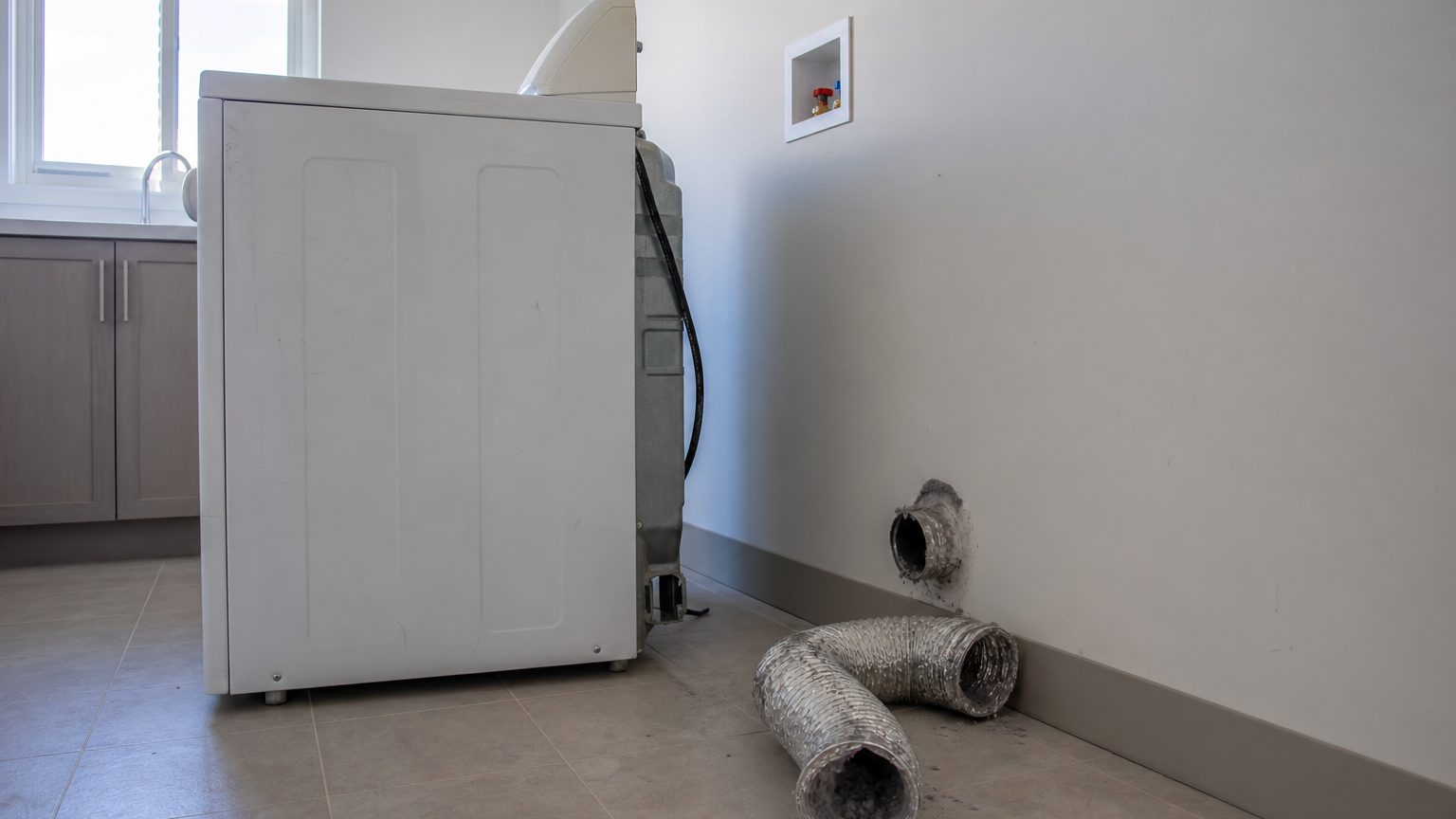
- Lint around the dryer door, on the floor behind the dryer, or around the outside vent hood.
- The outside flap barely opens while the dryer is running.
Poor drying or restricted airflow needs checking. Stop using the dryer if you notice a burning smell or overheating, and have the cause addressed before using it again.
Why does a clogged vent matter?
Because heat and lint are a bad mix. A dryer pushes hot, damp air out through the vent. When lint narrows the duct, the air slows down, the drum stays hot for longer, and the lint sitting in the duct is right in the path of that heat. That is how a clogged vent turns into a fire risk, and it is why the NFPA puts cleaning at the top of its list.
A clogged vent also costs you. Every extra cycle is more power or gas, more wear on the dryer, and more time.
A Manitoba winter tip: check the flap for snow
One line on the NFPA’s safety sheet matters more here than in most places: “Make sure the outdoor vent flap is not covered by snow.” In a Manitoba winter, a drift against the wall or a flap frozen shut can block the vent completely, even if the duct itself is clean. After a big snowfall, take a look at where your dryer vents outside and clear it.
What can you do yourself?
Plenty. These habits come straight from the NFPA sheet:
- Clean the lint filter before or after every load, and never run the dryer without it.
- Use rigid or flexible metal venting, which keeps air moving and drying times short.
- Do not leave the dryer running when you go out or go to bed.
- Keep the area around the dryer clear of boxes, clothing and anything else that burns.
What most people cannot do easily is clean the full length of the duct behind the wall. That is where a professional cleaning comes in.
Three homes, three schedules
A busy family farmhouse. Several loads a day, work clothes covered in field dust, and a long vent run to the outside wall. This house should have the vent cleaned at least once a year, and it is easy to do on the same visit as a duct cleaning.
A salon that runs its dryers almost all day. Commercial dryers work much harder than a family’s. One salon owner in our reviews described their dryers as running “almost 24/7.” We cleaned them out on the same weekend visit as the building’s vents. A business like that needs its vents checked more than once a year.
A retired couple in a small house. A few loads a week and a short, straight vent. Follow the dryer manufacturer’s cleaning guidance and check the vent condition. Longer drying times warrant attention between scheduled cleanings.
Frequently asked questions
Can a clogged dryer vent cause a fire?
Yes. Lint catches fire easily, and a clogged vent traps heat right where the lint is. The NFPA names failure to clean as the leading cause of home dryer and washer fires.
Is it the lint trap or the vent?
Check the lint trap first. If it is clean and drying still takes too long, the vent is the likely problem.
Can I clean my dryer vent myself?
You can clean the lint trap and the short section right behind the dryer yourself. The full run to the outside wall is harder to reach, and a professional cleaning gets all of it.
Do you clean dryer vents on the same visit as a duct cleaning?
Yes. That is how most of our customers book it. Mention it when you call.
Book it with your duct cleaning
If your dryer is taking longer than it should, add a dryer vent cleaning to your next duct cleaning visit and have both done at once.
Source: National Fire Protection Association, Clothes Dryer & Washing Machine Safety tip sheet.